
Stored Grain Insects are harmful pests that attack grains and other stored agricultural products after harvesting. These insects infest cereals such as wheat, rice, maize, barley, and pulses during storage and transportation. They feed on grains and multiply rapidly in warm and humid conditions, causing serious post-harvest losses. Stored Grain Insects are considered one of the major problems in grain storage systems throughout the world because they reduce both the quality and quantity of stored food materials.
The damage caused by Stored Grains Insects affects the nutritional value, weight, appearance, and market quality of grains. Infested grains become contaminated with insect fragments, excreta, and webbing, making them unsuitable for human consumption and commercial trade. In severe cases, insect activity also increases moisture and temperature inside storage facilities, which promotes mold growth and further deterioration of grains. As a result, farmers and grain traders suffer heavy economic losses due to grain infestation.
Proper storage management and pest control practices are essential to protect grains from Stored Grain Insects. Methods such as grain drying, sanitation, airtight storage, fumigation, and regular inspection help reduce insect infestation and maintain grain quality. Modern technologies and Integrated Pest Management (IPM) strategies are also used for effective grain storage protection. Understanding the biology, damage, and control of Stored Grain Insects is important for minimizing post-harvest losses and ensuring food security.
What Are Stored Grain Insects?
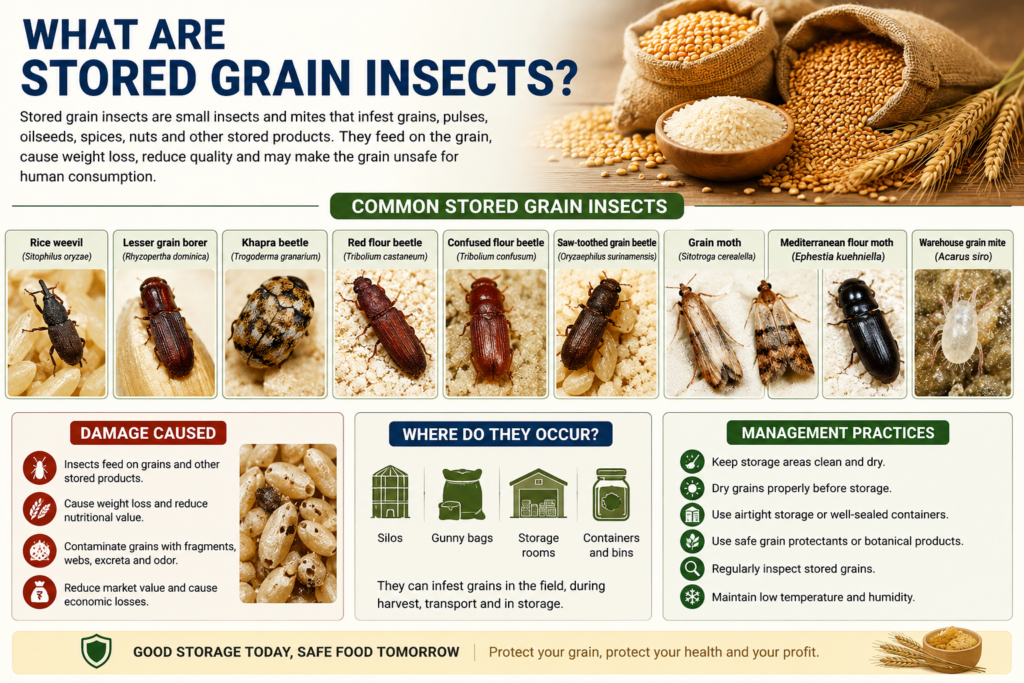
Stored Grains Insects are pests that damage grains and stored food products during storage. These insects feed on cereals, flour, pulses, and processed grain products, causing quality deterioration and grain losses. They are commonly known as grain storage pests or stored product insects.
Some Stored Grain Insect attack whole grains directly, while others feed on broken grains and processed products. Warm temperatures, high moisture, and poor sanitation favor their rapid growth and reproduction in storage facilities.
Common examples of Stored Grain Insect include rice weevils, lesser grain borers, red flour beetles, sawtoothed grain beetles, and khapra beetles. Proper grain storage and monitoring are essential for controlling these harmful pests.
Importance of Grain Storage Protection
Grain storage protection is important for maintaining food quality and reducing post-harvest losses caused by insects, moisture, and fungi. Proper storage practices help preserve grains for long periods without damage.
Stored Grain Insects can significantly reduce grain weight, nutritional value, and market price if storage conditions are poor. Effective protection methods improve food security and reduce economic losses for farmers and traders.
Good storage management includes proper grain drying, sanitation, moisture control, and regular inspection. Modern storage technologies also help prevent grain infestation and maintain grain quality.
Classification of Stored Grain Insects
Stored Grain Insects are mainly divided into primary pests and secondary pests based on their feeding habits. This classification helps in understanding the type of grain damage caused by storage pests.
Primary pests attack whole and healthy grains directly by boring into the kernels. Examples include rice weevils and lesser grain borers. These insects are highly destructive because they damage intact grains.
Secondary pests mainly feed on broken grains, flour, and processed cereal products. Red flour beetles and sawtoothed grain beetles are common secondary storage pests found in grain warehouses and flour mills.
Common Types of Stored Grain Insects
Several Stored Grain Insects commonly infest stored cereals and food products. These insects vary in feeding behavior and damage potential.
Rice weevils and lesser grain borers are major primary pests that attack whole grains. Red flour beetles and sawtoothed grain beetles are common secondary pests found in flour and damaged grains.
The khapra beetle is considered one of the most dangerous grain storage pests because it survives under harsh conditions and causes severe grain losses.
Causes of Stored Grain Insect Infestation
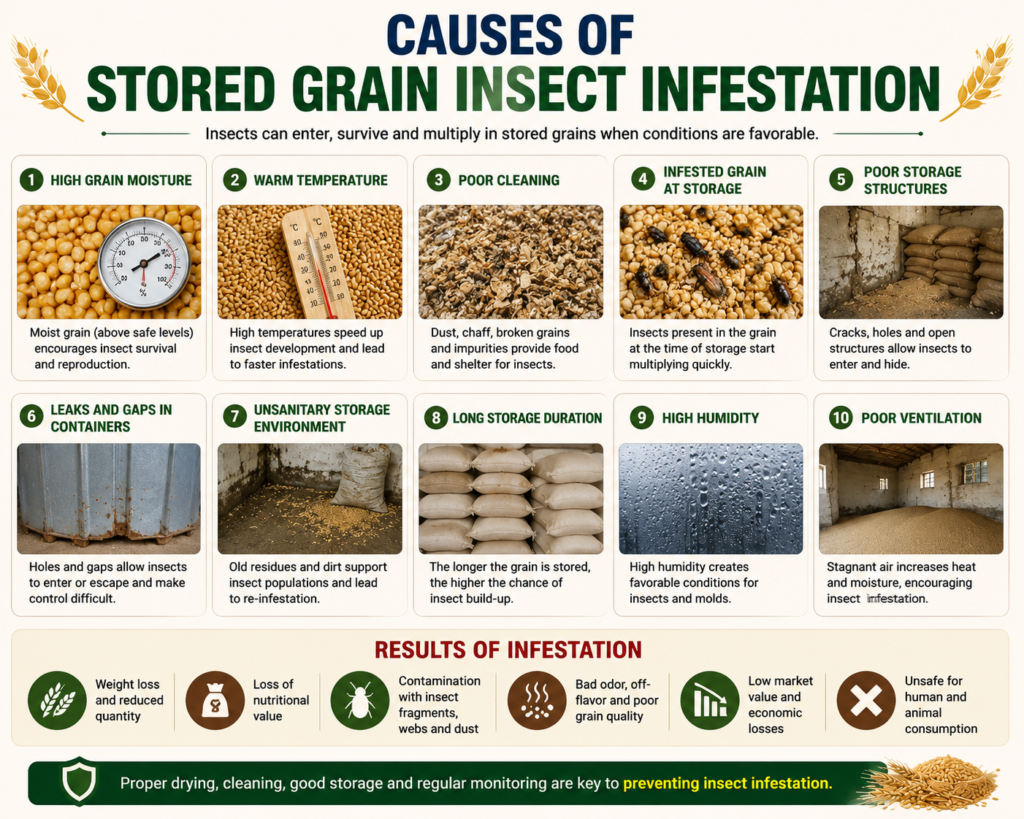
Improper storage conditions are the major cause of infestation by Stored Grain Insects. Warm temperatures, high humidity, and poor sanitation create favorable environments for insect growth.
High grain moisture increases insect activity and promotes rapid reproduction. Cracks in storage structures and old grain residues also provide shelter and food for storage pests.
Regular cleaning, proper ventilation, and moisture control are important for preventing grain infestation and maintaining safe storage conditions.
Life Cycle of Stored Grain Insects
The life cycle of Stored Grain Insects usually consists of four stages: egg, larva, pupa, and adult. Female insects lay eggs on or inside grains.
Larvae feed on grain materials and develop into pupae before becoming adults. Under favorable conditions, insects reproduce rapidly and complete their life cycle within a few weeks.
Understanding the insect life cycle is important for selecting effective pest control methods and reducing grain infestation.
Damage Caused by Stored Grain Insects
Stored Grain Insects cause both quantitative and qualitative losses in stored grains. They consume grain contents and reduce grain weight.
Infested grains lose their nutritional value, market quality, and seed germination capacity. Insects also contaminate grains with body fragments and excreta.
Severe infestation increases grain moisture and temperature, promoting mold growth and further grain deterioration.
Economic Importance of Stored Grain Insects
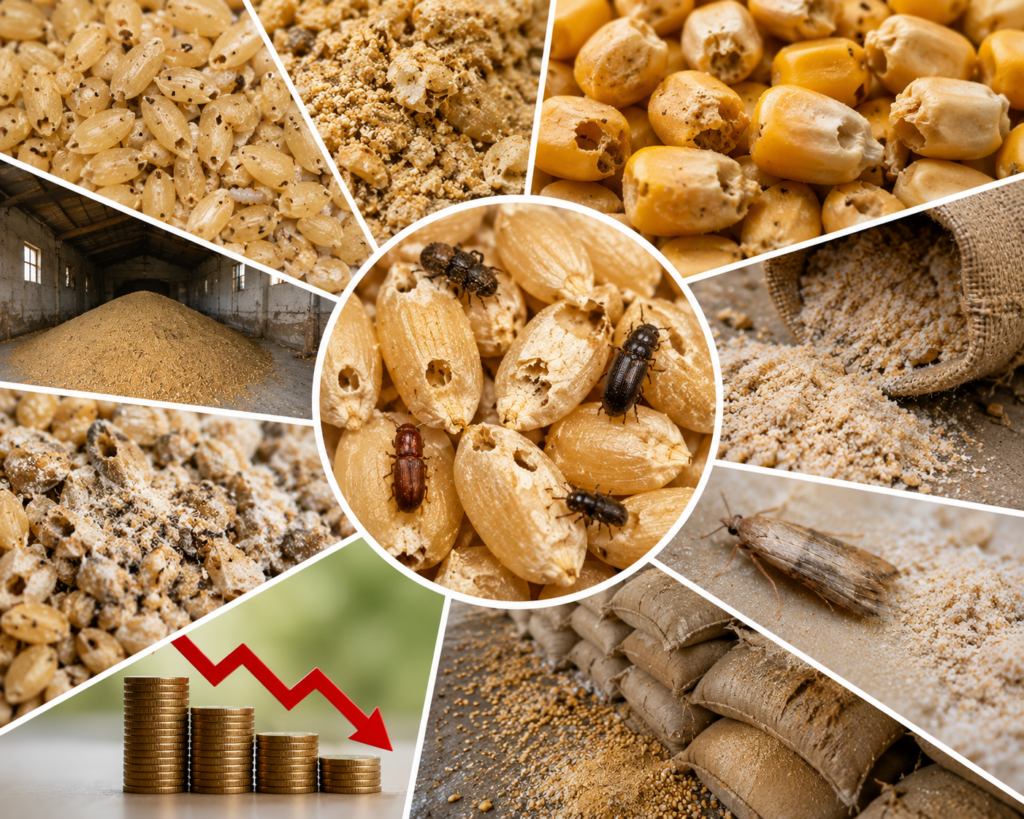
Stored Grain Insects cause major economic losses worldwide by reducing grain quantity and quality during storage. Farmers and traders lose income due to damaged grains and reduced market prices.
Post-harvest losses caused by storage pests also affect national food security, especially in developing countries where grain storage facilities are limited.
Effective grain protection methods help reduce economic losses and improve agricultural productivity.
Detection and Monitoring of Grain Insects
Early detection of Stored Grain Insects is important for preventing severe infestation. Regular grain inspection helps identify pests before they spread widely.
Methods such as visual inspection, grain sampling, probe traps, and pheromone traps are commonly used for insect monitoring.
Modern electronic monitoring systems also help detect insect activity and maintain grain quality in large storage facilities.
Prevention and Control of Stored Grain Insects
Proper prevention and control measures are essential for reducing damage caused by Stored Grain Insects. Grain drying and sanitation are important preventive practices.
Chemical methods such as fumigation and approved insecticides are widely used in grain storage facilities. Biological control and airtight storage systems are also effective.
Integrated Pest Management (IPM) combines different control methods for sustainable and long-term grain protection.
Modern Technologies Used in Grain Storage Protection
Modern grain storage technologies help reduce post-harvest losses caused by Stored Grain Insects. Advanced storage systems maintain proper temperature and moisture levels.
Electronic sensors, automatic ventilation systems, and pest detection devices improve storage management and early infestation detection.
Hermetic storage technologies are increasingly used to protect grains from insects, moisture, and fungal contamination.
Conclusion
Stored Grain Insects are major pests that damage grains during storage and cause serious economic losses worldwide. They reduce grain quality, nutritional value, and marketability.Proper grain storage management, sanitation, and regular monitoring are essential for preventing insect infestation and protecting stored food products.The use of modern technologies and Integrated Pest Management strategies can effectively control Stored Grain Insects and improve food security.
FAQs
What are stored grain insects?
Stored Grain Insects are pests that attack grains and stored food products during storage and transportation.
Which insect causes the most damage to stored grains?
The khapra beetle and rice weevil are among the most destructive grain storage pests worldwide.
How can stored grain insects be controlled?
Proper drying, sanitation, airtight storage, fumigation, and Integrated Pest Management are effective control methods.
Why do insects attack stored grains?
Insects attack stored grains because they provide food, moisture, and favorable environmental conditions for growth and reproduction.
What are the signs of grain insect infestation?
Common signs include damaged grains, powder formation, insect presence, unpleasant odor, heating, and mold development.
