
I’ve always found it funny how new beekeepers spend all their time obsessing over the wooden boxes and the latest hive tools, while often forgetting the most important part of the equation: the landscape outside the hive. I honestly believe that honey bee flora is the true secret map to a successful apiary because, at the end of the day, your bees are only as healthy as the forage they can reach. When you start looking at the environment through the eyes of a bee, you stop seeing just “greenery” and start seeing a complex network of nectar and pollen resources that dictate exactly how much honey your colony can produce.
From my experience, understanding bee flora completely changes how you manage your bees throughout the seasons. It isn’t just about knowing which flowers are pretty; it’s about knowing which specific plants are high-value “honey plants” and when they are going to bloom. This knowledge allows you to anticipate “honey flows” before they happen or prepare for lean times when the landscape goes quiet. Without this “floral intelligence,” you’re essentially flying blind, hoping your bees find enough food to survive rather than strategically placing them where they can truly thrive.
In this guide, we are going to dive deep into the world of bee flora and how its distribution across different regions affects everything from colony strength to honey flavor. We’ll talk about how different environments—from agricultural fields to wild forests—provide different levels of support for your hives. My goal is to help you master the relationship between the bee and the bloom, so you can turn your surroundings into a high-performance engine for your apiary. It’s a fascinating journey that proves that being a great beekeeper is about being a great botanist, too.
2. Defining Bee Flora: More Than Just Pretty Flowers
I’ve always felt that the biggest mistake people make is thinking that every flower in a garden is useful to a honey bee. In reality, the concept of honey bee flora is much more specific; it refers only to the plant species that actually provide the essential “floral resources”—nectar and pollen—that bees need to survive and produce honey. From my experience, you have to categorize these plants based on their output: “nectar plants” provide the sugary fuel for energy, while “pollen plants” supply the protein and fats needed to raise healthy brood. It’s important to remember that a beautiful, lush landscape can still be a “green desert” if the flowers don’t offer accessible nutrients, which is why identifying the most productive bee flora is far more important for a beekeeper than simply looking for pretty petals.
3. The Beekeeping Map: How Agro-Ecological Zones Shape the Landscape
I honestly believe that if you want to understand honey bee flora distribution, you have to start by looking at the “Agro-Ecological Zones” of your region. These zones aren’t just lines on a map; they represent the unique combination of soil, rainfall, altitude, and temperature that dictates exactly what can grow there. From my experience, a beekeeper in a humid coastal zone is managing a completely different “floral menu” than someone in a dry, mountainous area. Each zone creates a specific environment that favors certain plants, which in turn determines the type of honey you’ll harvest.
When you analyze how these zones shape the landscape for your bees, a few key factors always stand out:
- Climate & Rainfall: High-rainfall zones often support lush, nectar-heavy forests, while arid zones might rely on hardy, deep-rooted shrubs that produce intense, high-protein pollen.
- Altitude & Temperature: Plants at higher elevations often have shorter, more concentrated blooming periods, creating a “honey flow” that is fast and furious compared to the steady pace of the lowlands.
- Soil Chemistry: The pH and mineral content of the soil in a specific zone can actually change the sugar concentration of the nectar in the local bee flora.
Understanding these zones is like having a GPS for your apiary. It helps you predict not just what will bloom, but when and how much. For example, I’ve seen how moving hives just fifty miles into a different ecological zone can be the difference between a record-breaking honey crop and a season where you have to feed your bees just to keep them alive. By matching your beekeeping practices to the specific characteristics of your zone, you’re no longer fighting against nature—you’re working in sync with the natural rhythm of the land.
4. Following the Bloom: Bee Flora Distribution Across Diverse Zones
I’ve always found it amazing how bee flora acts like a traveling festival, with different species appearing as you move across the landscape. In the highlands, you’ll often find hardy trees and wild shrubs that thrive in cooler air, providing concentrated bursts of nectar. As you move into the lowlands, the variety shifts toward agricultural crops like sunflowers and tropical fruit trees. From my experience, the distribution follows distinct patterns: Forest Zones offer high diversity and complex honey flavors, Agricultural Zones provide massive but short-lived “honey flows,” and Urban Zones often bridge the gap with steady garden blooms. The real skill is “following the bloom”—knowing exactly which landscape is about to turn into a sea of flowers so your bees are always where the table is set.
5. The Beekeeping Calendar: Seasonal Availability and the “Hungry Gap”
I’ve always said that a beekeeper’s most important tool isn’t a hive tool—it’s a calendar. The seasonal availability of bee flora is never a steady stream; it’s a series of peaks and valleys that dictate the life cycle of the colony. During the “Peak Flow” in spring and summer, the landscape is a buffet of nectar, and the hive is a factory of activity. However, from my experience, the real test of a beekeeper is managing the “Hungry Gap”—those lean weeks in late autumn or early spring when the major honey bee flora has finished blooming, but the next round hasn’t started yet.
If you aren’t tracking these seasonal shifts, you’ll be caught off guard when the nectar suddenly dries up. To keep your hives thriving year-round, you have to recognize the different phases of the floral year:
- The Build-Up Phase: Early season blooms (like Willows or fruit blossoms) provide the initial pollen needed to kickstart brood rearing.
- The Main Honey Flow: This is the “gold rush” where the most abundant bee flora is in full bloom, and bees are working overtime to store surplus honey.
- The Dearth (The Hungry Gap): A period where high temperatures or seasonal changes cause a lack of available flowers, forcing bees to live off their stores.
- The Late Season Recharge: Autumn blooms (like Goldenrod or Ivy) that allow the colony to pack away final stores before winter.
Honestly, mastering the seasonal availability of your local area is the only way to avoid losing colonies to starvation. I’ve seen seasons where a late frost kills off the early bee flora, extending the “Hungry Gap” by weeks. When you know your calendar, you can step in with supplemental feeding or move your hives to a different zone where the flowers are still holding on. It’s all about timing; if you know the bloom, you know the bee.
6. Nectar vs. Pollen: Understanding the Abundance of Honey Bee Flora
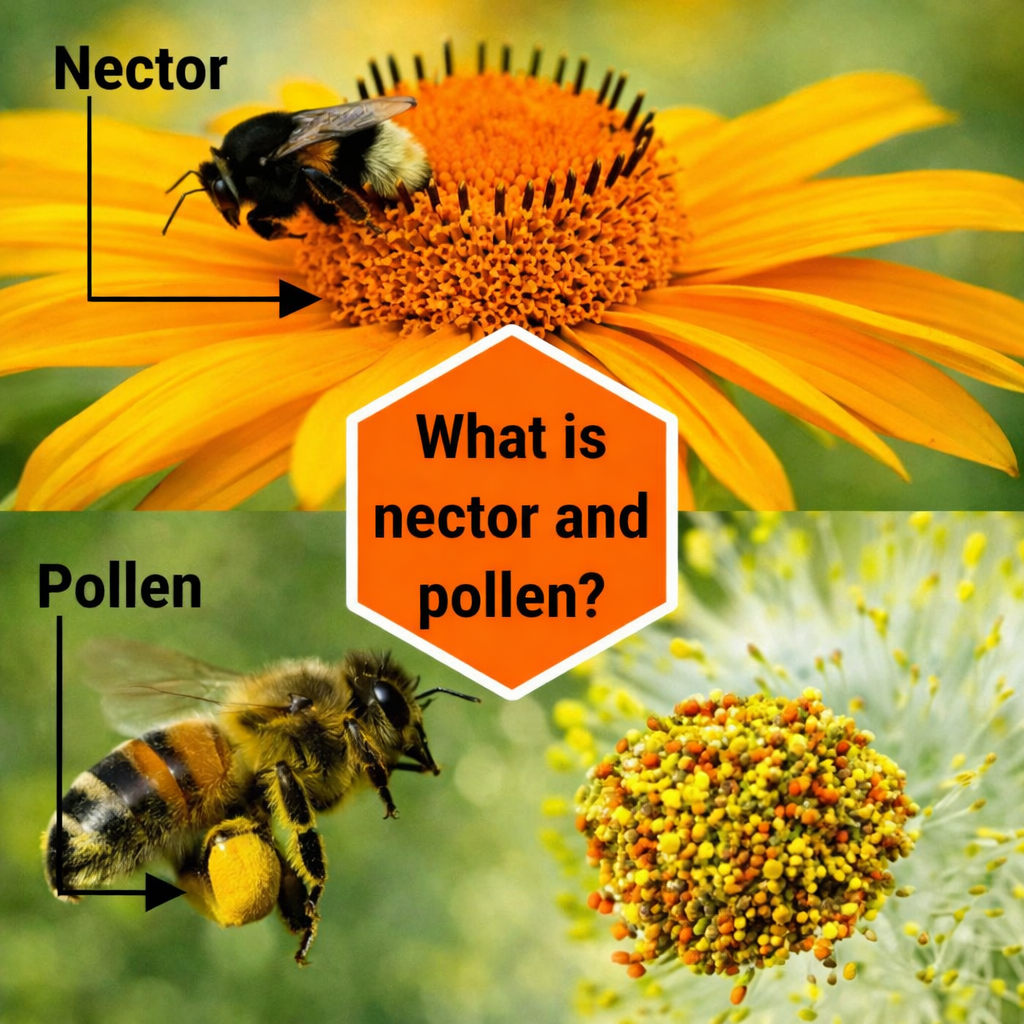
I’ve always found that a landscape’s true value isn’t just in the number of flowers, but in the balance of what they offer. To understand the abundance of honey bee flora, you have to distinguish between “energy” and “building blocks.” Nectar provides the sugary fuel for honey and flight, while pollen is the essential protein for raising healthy larvae. From my experience, a colony can actually stall out in a field of nectar-rich bee flora if there isn’t enough pollen-producing forage to support growth. The best environments offer a mix: Nectar-Dominant species for the honey harvest, Pollen-Dominant species for brood rearing, and Dual-Purpose powerhouses that provide both. Successful beekeeping relies on this “mixed diet” to ensure the colony remains both productive and physically resilient.
7. The Heavy Hitters: Major Nectar and Pollen-Producing Species
I’ve always believed that every beekeeper should be able to identify the “Heavy Hitters” in their area—those elite bee forage plants that do the literal heavy lifting for the hive’s survival. While thousands of plants are technically part of the local bee flora, only a few major species produce the massive volumes of nectar needed for a surplus honey harvest or the high-quality pollen required for explosive colony growth. From my experience, species like Eucalyptus, Acacia, and Brassica (mustard) are world-class nectar producers, while plants like Clovers, Sunflowers, and Maize act as the primary protein engines for brood rearing. Knowing these specific honey bee flora species allows you to predict your “big” honey flows and ensures you aren’t mistaking a patch of low-value weeds for a high-production foraging ground.
8. Diversity Matters: The Link Between Bee Flora and Honey Production
I honestly believe that a “monoculture” diet is as bad for bees as it is for humans; the real secret to a record-breaking harvest lies in honey bee floral diversity. When a landscape offers a wide variety of bee flora, the colony benefits from a full spectrum of nutrients that helps them stay resilient against disease. This diversity acts as a biological “insurance policy”—if one plant species fails due to weather, the bees can still thrive on secondary sources. From my experience, high honey bee floral diversity doesn’t just increase honey production; it results in a more complex, premium honey with a flavor profile that single-crop sources simply can’t match.
9. The Challenges: Factors Affecting the Distribution and Abundance of Bee Flora
I’ve always found it frustrating how quickly a perfect beekeeping site can change due to environmental factors. The distribution of bee flora is incredibly sensitive to climate instability and land-use patterns, which can disrupt the “bloom schedule” bees rely on. From my experience, the abundance of honey bee flora is currently facing massive challenges from habitat fragmentation and aggressive agricultural practices that wipe out essential “secondary” forage like clover or wildflowers. When deforestation removes the “heavy hitters” from the landscape, the honey bee floral diversity plummets, turning once-rich areas into food deserts. To protect our honey production, we have to be more proactive than ever in monitoring these shifts and adapting our apiary locations to match the changing environment.
10. Future-Proofing Your Apiary: The Importance of Bee Flora Conservation
I honestly believe that the future of beekeeping isn’t just about managing hives, but about actively protecting the landscape that feeds them. Bee flora conservation is the most important long-term investment you can make because, without a diverse and stable habitat, even the best-managed colony will eventually fail. From my experience, we have to move beyond just being honey harvesters and start acting as stewards of the environment, ensuring that the distribution of bee flora remains wide enough to support pollinators year-round. By planting native bee forage plants, reducing the use of harmful herbicides, and advocating for the protection of wild agro-ecological zones, we are essentially future-proofing our own honey production.
11. Conclusion: Mapping Out a Productive Future in Apiculture
I’ve always felt that beekeeping is a partnership between the keeper, the bee, and the land, and the success of that partnership depends entirely on the distribution of bee flora. As we’ve seen, understanding the abundance of honey bee flora within your specific agro-ecological zones is what allows you to move from guesswork to precision. By respecting the seasonal availability of these resources and prioritizing honey bee floral diversity, you aren’t just chasing a better honey harvest—you’re ensuring the long-term health of your colonies. From my experience, the more you invest in the landscape, the more the bees give back. It’s a powerful reminder that a productive future in apiculture isn’t built inside the hive, but in the vibrant, flowering world that surrounds it.
FAQS
1. Can a landscape be “green” but still have no food for bees? Absolutely. I’ve seen many lush, green areas that are essentially “floral deserts.” This happens when the plants are either non-flowering, have flower shapes that bees can’t access, or are ornamental varieties that have been bred for looks rather than nectar and pollen production. True bee flora must provide accessible floral resources to be useful.
2. Why do my bees ignore some flowers even when they are in full bloom? Bees are very efficient; they prioritize plants with the highest sugar concentration in their nectar. If there is a “Heavy Hitter” like clover or a fruit tree blooming nearby, they will fly right past other flowers to get the better “paycheck.” It’s all about the reward-to-effort ratio.
3. How far will a honey bee travel to find good flora? While bees prefer to stay within 1 to 2 miles of the hive to save energy, they can fly up to 5 miles or more if the bee flora distribution is sparse. However, the further they fly, the more honey they consume as “fuel,” which reduces your final harvest.
4. What is the difference between a “honey flow” and a “pollen flow”? A honey flow occurs when nectar-rich bee flora is so abundant that bees store more than they can eat, creating a surplus for the beekeeper. A pollen flow is when plants provide the protein-rich dust needed for the Queen to lay eggs and for the colony to grow its population. You need both for a truly successful season.
5. How does weather affect the abundance of honey bee flora? Weather is the ultimate “volume knob.” High winds can dry out nectar, heavy rain can wash it away, and extreme heat can cause plants to stop producing nectar altogether to conserve moisture. Even if the flowers are there, the abundance of honey bee flora can change hour by hour based on the forecast.


