
The study of Inter-specific Negative Interactions is a vital branch of entomology that examines the various ways in which individuals of different species adversely affect one another’s fitness and survival. In any given ecosystem, an insect is at the center of a complex web where “Harmful” factors—ranging from predatory animals to toxic plants—constantly exert pressure on its life cycle. By systematically classifying these negative relationships, researchers in 2026 can better understand the forces of environmental resistance that prevent a species from reaching its maximum biotic potential, providing a technical blueprint for sustainable pest management.
In 2026, the framework for analyzing Inter-specific Negative Interactions has evolved to include the molecular study of allelochemicals and the high-resolution tracking of predatory behavior in agroecosystems. These interactions are characterized by an antagonistic dynamic where at least one participant is harmed, such as an insect being trapped by a carnivorous plant or a host organism being exploited by a parasite. For a professional in agricultural sciences or ecological conservation, understanding these conflicts is essential for maintaining the “Balance of Nature,” ensuring that no single species dominates the environment at the total expense of another.
Mastering the nuances of Inter-specific Negative Interactions is critical for developing biological control strategies that utilize natural enemies to regulate pest populations. Whether we are examining the killing effect of the Pitcher plant or the predatory pressure exerted by small mammals like shrews and hedgehogs, these interactions represent the primary drivers of natural selection among hexapods. This article provides a technical breakdown of these antagonistic classifications, exploring the lethal mechanics of predation, the resource exploitation of parasitism, and the chemical warfare of secondary plant metabolites.
Defining Negative Heterospecific Relationships
The Concept of Interspecific Friction: One Species Benefiting at Another’s Expense
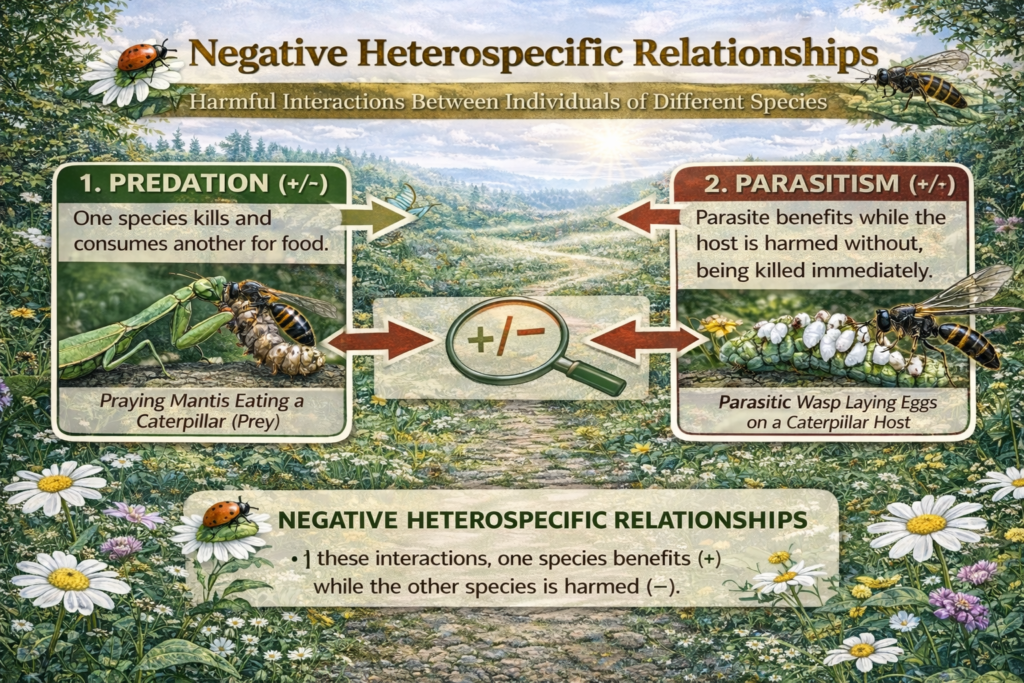
- Negative interactions occur when individuals of different species interact in a way that is harmful to at least one of the participants.
- In many cases, one species benefits (such as a predator) while the other is significantly harmed or killed (the prey).
Antagonistic Co-evolution: The Evolutionary Arms Race between Insects
- These Inter-specific Negative Interactions drive an evolutionary cycle where prey develop defenses and predators develop better hunting techniques.
- The interaction between different species, such as a ladybird beetle and a whitefly, serves as a primary example of this ecological struggle.
Predation: The Lethal Interspecific Interaction
Generalist vs. Specialist Predators in Agroecosystems
- Predators are harmful animals or insects that feed on other insects to survive.
- Generalists may feed on a variety of species, while specialists target a specific host, creating different levels of population pressure.
Case Study: Ladybird Beetles as Negative Regulators of Jassid Populations
- The ladybird beetle is a classic example of an insect that has a negative interaction with different species like jassids and whiteflies.
- By preying on these pests, the beetle acts as a natural biological control agent within the environment.
Vertebrate Predation: The Impact of Birds, Lizards, and Small Mammals
- Many vertebrates exert massive pressure on insect populations, including birds like sparrows, starlings, and mynahs.
- Small mammals, such as shrews, moles, hedgehogs, and anteaters, also play a significant role in the negative regulation of hexapods.
Parasitism: The Specialized Exploitation of Host Resources
Ectoparasites vs. Endoparasites: Living on and Within the Animal Host
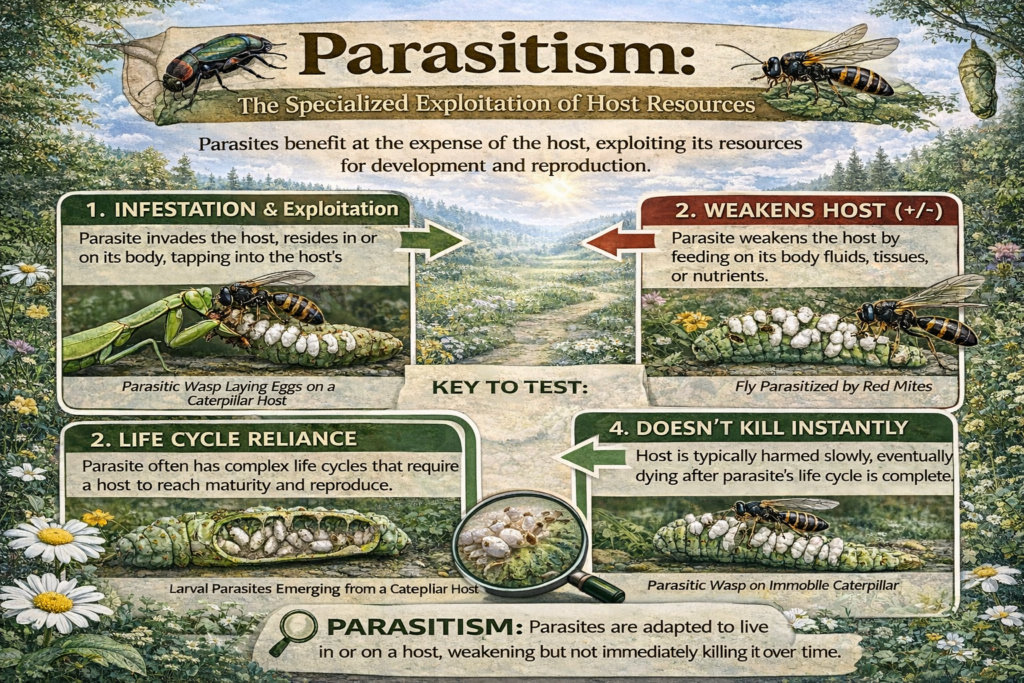
- Parasitic insects live on (ecto-) or inside (endo-) the bodies of other animals to obtain food and shelter.
- Useful animals like buffaloes, poultry, dogs, and cats can inadvertently serve as hosts for these negative interactions.
Host-Parasite Dynamics: Impact on Growth, Survival, and Fecundity
- Parasitism is a negative interaction because it drains the host’s energy and resources, often leading to reduced health or death.
- The parasite benefits at the direct expense of the host’s physiological well-being.
Chemical Warfare: Allelochemicals and Negative Plant-Insect Interaction
Secondary Plant Metabolites: The Repelling Effect of Toxic Substances
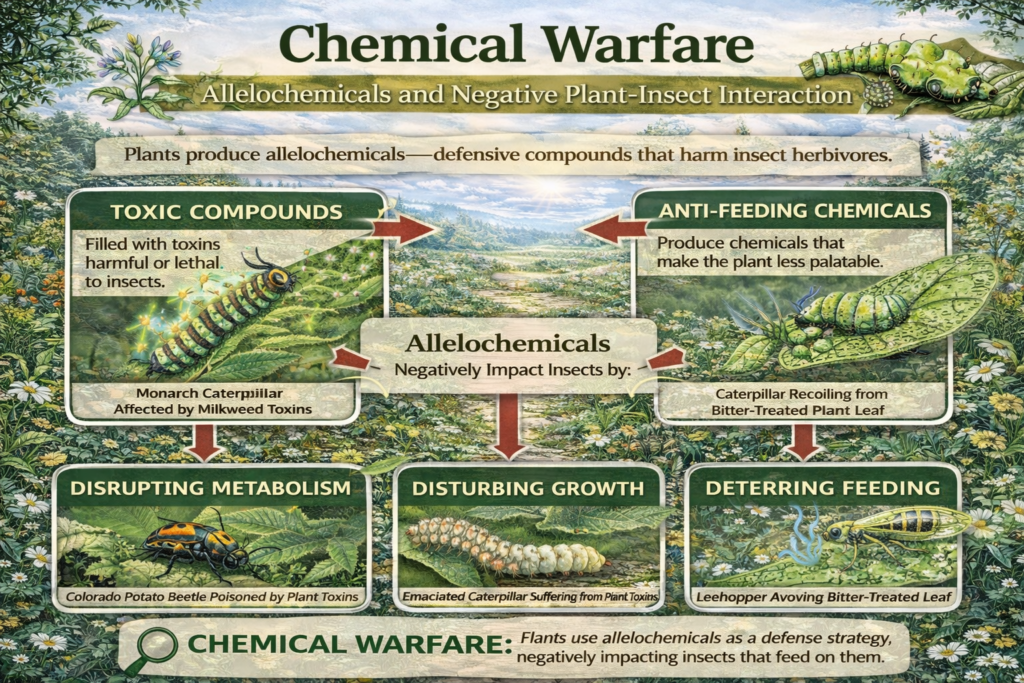
- Harmful plants produce toxic substances known as allelochemicals or secondary plant metabolites to repel insects.
- These byproducts are a primary defense mechanism that negatively impacts an insect’s ability to feed or colonize a plant.
Case Study: Neem and Tobacco as Chemical Deterrents to Herbivory
- Plants like Neem, Tobacco, and Chrysanthemum are well-known for their repelling effects on various insect species.
- These Inter-specific Negative Interactions are often utilized by humans to create natural biopesticides.
Insectivorous Plants: The Ultimate Negative Interaction for Hexapods
- Some plants have evolved to actively trap and kill insects to meet their own nutritional deficiencies.
- Examples include the Pitcher plant, Venus flytrap, and Sundew plant, which represent a lethal intersection of botany and entomology.
Interspecific Competition: The Struggle for Limited Environmental Resources
H3: Niche Overlap and the Competitive Exclusion Principle
- When different species, such as a whitefly and a jassid, require the same limited resources in a shared microenvironment, competition occurs.
- This negative interaction can lead to the displacement of one species if it cannot compete effectively for food or space.
Conclusion: The Role of Negative Interactions in Maintaining Ecosystem Balance
Inter-specific Negative Interactions are fundamental to the stability of the global ecosystem. By preventing any single species from growing unchecked, these antagonistic relationships—from the chemical defenses of plants to the predatory habits of birds and beetles—ensure a balanced “sum total” of external factors. Understanding these classifications is the key to modern entomological science and sustainable agricultural success.
FAQs: Understanding the Darker Side of Insect Ecology
- What makes an interaction “negative”? It is considered negative when at least one participant, such as a prey insect or a host animal, is harmed or deprived of resources.
- What are allelochemicals? They are toxic secondary metabolites produced by plants to repel or kill insects.
- How does a pitcher plant interact negatively with insects? It uses a “killing effect,” trapping insects in its structure to digest them for nutrients.
- Which animals are common predators of insects? Common predators include birds (mynahs, sparrows), reptiles (lizards), and small mammals (hedgehogs, anteaters).
- Is parasitism always fatal for the host? Not always, but it is always a negative interaction because the parasite survives by exploiting the host’s food and shelter.


