
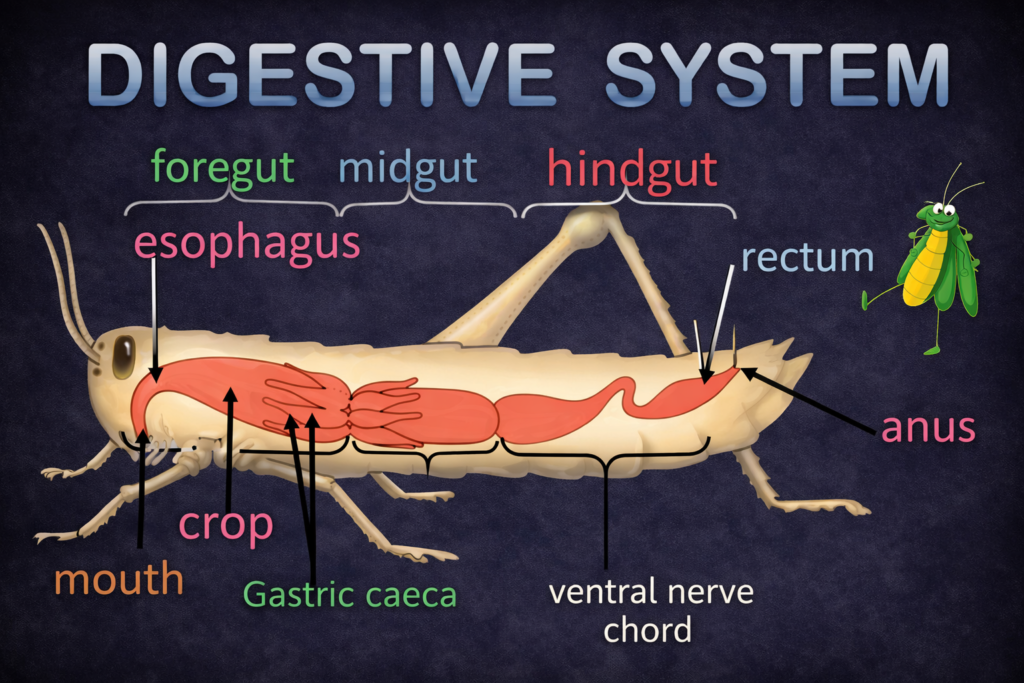
The internal morphology of insect digestive systems is centered around a highly specialized tubular structure known as the alimentary canal. This elongated and continuous canal extends from the mouth to the anus and is positioned centrally within the body cavity. It performs four essential biological functions—ingestion, digestion, absorption, and excretion—through a coordinated and efficient mechanism. The internal morphology of insect digestive structures is not merely anatomical but also functional, ensuring that food is processed with maximum efficiency and minimal resource loss.
The concept of internal morphology of insect systems highlights the relationship between structure and function. Insects exhibit an extraordinary range of feeding habits, from chewing solid plant materials to sucking liquid nutrients such as nectar or blood. As a result, their digestive systems have evolved specialized adaptations that align with their dietary needs. For instance, chewing insects possess strong mechanical grinding structures, while fluid feeders have modified internal chambers that allow rapid processing of large volumes of liquid. This structural diversity demonstrates how the internal morphology of insect digestive systems is closely linked to ecological specialization.
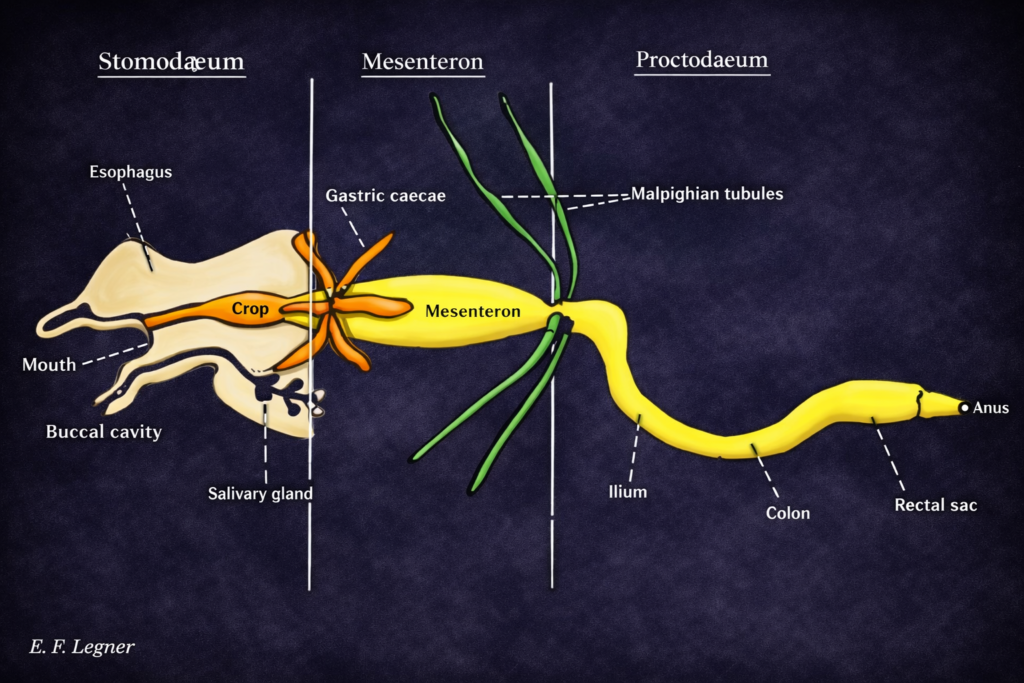
The alimentary canal in the internal morphology of insects anatomy is divided into three primary regions: the foregut (stomodaeum), midgut (mesenteron), and hindgut (proctodaeum). Each region differs in embryonic origin and functional role. The foregut and hindgut are ectodermal and lined with a protective cuticle, while the midgut is endodermal and lacks this lining, making it the main site of chemical digestion and nutrient absorption. Together, these regions form a highly integrated system that ensures efficient processing of food and supports the survival of insects in diverse environments.
Structural Organization in the Internal Morphology of Insect
In the study of internal morphology of insects systems, the alimentary canal is viewed as a coordinated functional unit. Each segment performs a specific role, contributing to the overall efficiency of digestion and nutrient utilization.
This organization reflects a clear division of labor:
- The foregut manages ingestion and mechanical processing
- The midgut handles enzymatic digestion and absorption
- The hindgut is responsible for excretion and water conservation
Such compartmentalization ensures that mechanical and chemical processes occur without interference, enhancing digestive efficiency.
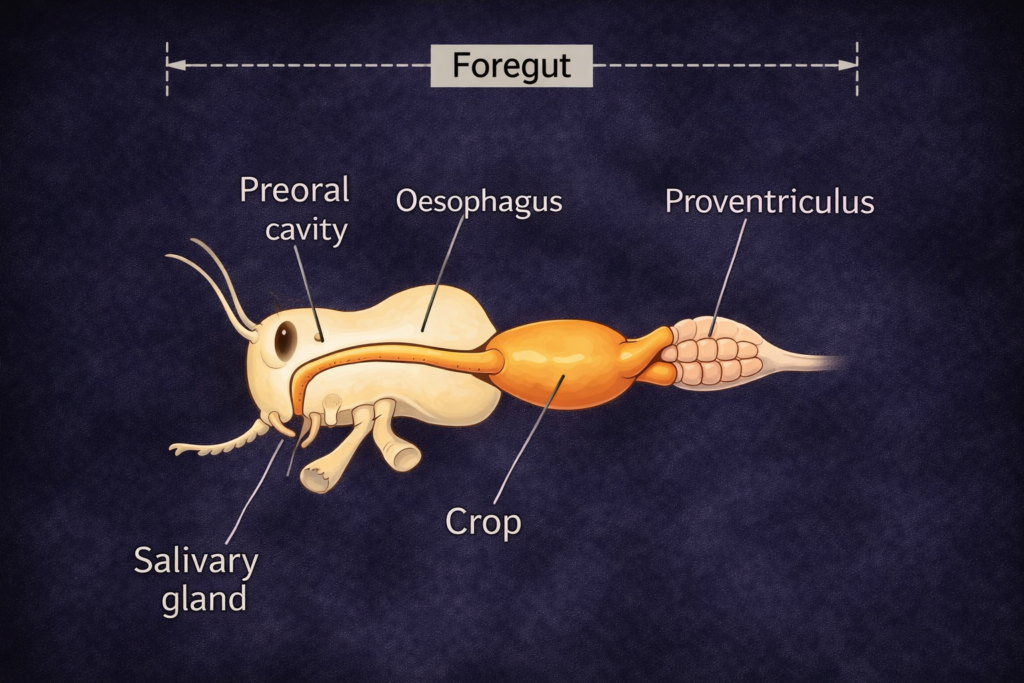
Foregut (Stomodaeum) in the Internal Morphology of Insect
The foregut is the anterior region of the alimentary canal and plays a critical role in food intake and preparation. In the internal morphology of insects, this region is lined with a cuticle that protects it from abrasion caused by food particles.
Mouth and Salivary Glands
The mouth serves as the entry point for food and is supported by salivary glands that secrete enzymes and lubricants. In the context of internal morphology of insects, saliva initiates digestion and facilitates the movement of food through the digestive tract.
Pharynx and Oesophagus
The pharynx is a muscular structure that pushes food into the oesophagus, which then transports it to the crop. In many insects, especially fluid feeders, the pharynx functions as a pump.
Crop
The crop acts as a temporary storage organ. Within the internal morphology of insect, this structure allows insects to consume food rapidly and digest it later, improving feeding efficiency.
Proventriculus (Gizzard)
The proventriculus is a muscular grinding organ equipped with denticles or teeth-like structures. Its function in the internal morphology of insect is to mechanically break down food, increasing the efficiency of chemical digestion in the midgut.
Cardiac Valve
The cardiac valve regulates the movement of food from the foregut to the midgut and prevents backflow, ensuring a controlled digestive process.
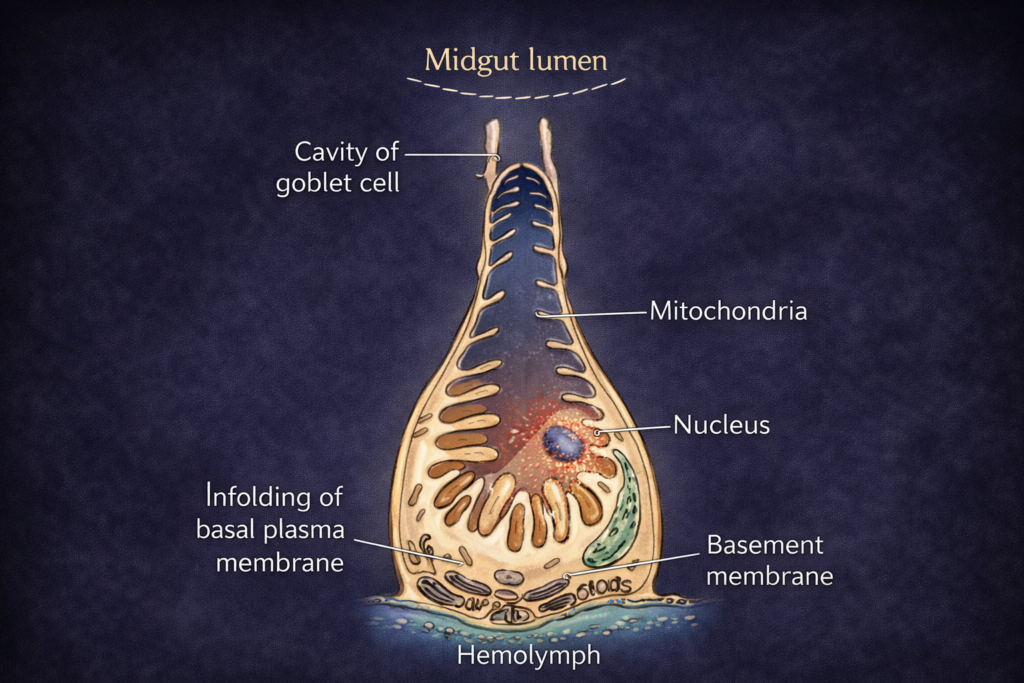
Midgut (Mesenteron) in the Internal Morphology of Insect
The midgut is the central region and serves as the primary site of digestion and absorption in the internal morphology of insect digestive systems. It lacks a cuticular lining, allowing direct interaction between food and digestive enzymes.
Digestive Function
Enzymes secreted in the midgut break down complex molecules into simpler forms that can be absorbed. This process is essential for nutrient assimilation.
Gastric Caeca
Gastric caeca are finger-like projections that increase surface area for digestion and absorption. In the internal morphology of insect, they also contribute to enzyme secretion and may host symbiotic microorganisms.
Peritrophic Membrane
The peritrophic membrane surrounds food within the midgut and protects the epithelial lining. It allows enzymes and nutrients to pass through while preventing damage from rough particles.
Cellular Structure
The midgut epithelium consists of specialized cells responsible for absorption, secretion, and regeneration. These cells maintain the efficiency and integrity of the digestive system.
Pyloric Valve
The pyloric valve controls the movement of digested material into the hindgut, ensuring proper flow and preventing backflow.
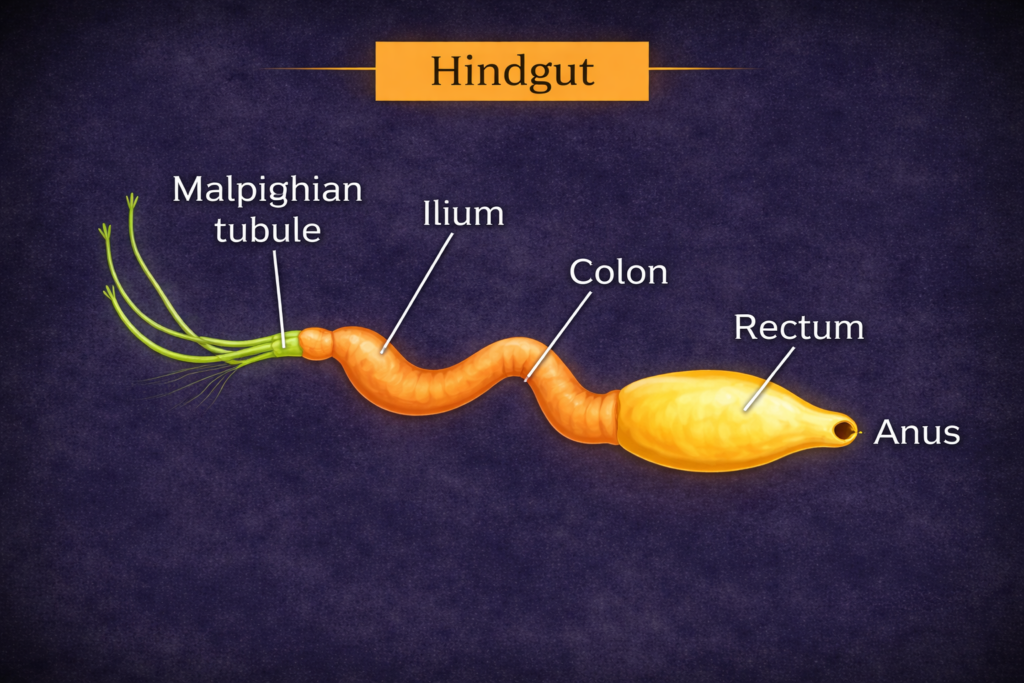
Hindgut (Proctodaeum) in the Internal Morphology of Insect
The hindgut is responsible for waste formation and resource conservation in the internal morphology of insect digestive systems. It is lined with a cuticle and plays a key role in maintaining water balance.
Ileum
The ileum is involved in the initial reabsorption of water and salts, contributing to internal homeostasis.
Colon
The colon continues the process of water recovery and compacts waste material.
Rectum and Rectal Pads
The rectum contains rectal pads that efficiently reabsorb water and ions. In the internal morphology of insect, this adaptation is crucial for survival in dry environments.
Anus
The anus serves as the final exit point for waste, completing the digestive process.
Malpighian Tubules in the Internal Morphology of Insect
Malpighian tubules are essential excretory structures in the internal morphology of insect systems. Located at the junction of the midgut and hindgut, they remove nitrogenous waste from the hemolymph and transfer it into the alimentary canal.
These tubules also regulate ion balance and conserve water, making them vital for survival in terrestrial habitats.
Adaptations in the Internal Morphology of Insect Digestive Systems
The internal morphology of insect digestive systems varies significantly depending on feeding habits:
- Chewing insects possess strong gizzards for grinding solid food
- Sucking insects have specialized adaptations for liquid diets
- Detritivores rely on microorganisms to digest complex materials
- Blood-feeding insects have mechanisms for rapid digestion of proteins
These adaptations demonstrate how the internal morphology of insect systems evolves to meet ecological demands.
Functional Integration and Efficiency
The internal morphology of insect digestive systems operates as a highly integrated unit. Each region performs a specialized function while contributing to overall efficiency. Mechanical processing, chemical digestion, absorption, and excretion are seamlessly coordinated, ensuring optimal utilization of food resources.
Conclusion
The internal morphology of insect digestive systems represents a highly efficient and adaptable biological design. The division of the alimentary canal into foregut, midgut, and hindgut allows for specialization of function, while additional structures such as gastric caeca, peritrophic membrane, rectal pads, and Malpighian tubules enhance performance. This integrated system enables insects to thrive in diverse environments and utilize a wide range of food sources. The study of the internal morphology of insect systems provides valuable insights into their evolutionary success and ecological dominance.
FAQs
What is the alimentary canal in the internal morphology of insect?
It is a tubular digestive structure responsible for processing food from ingestion to excretion.
What are the three main regions?
Foregut, midgut, and hindgut.
Where does most digestion occur?
In the midgut.
How do insects conserve water?
Through reabsorption in the hindgut, especially in rectal pads.
What is the role of Malpighian tubules?
They remove nitrogenous waste and help maintain internal balance.


